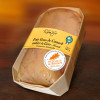


Deveining foie gras is essential to achieve a melt‑in‑the‑mouth homemade terrine that is perfectly balanced on the palate. This step, often thought to be reserved for professional chefs, is actually simple and quick once you know the right techniques. Contrary to popular belief, foie gras does not contain nerves but Y‑shaped blood veins that must be removed to avoid red marks, bitterness and a metallic taste when eating. The correct term is therefore deveining foie gras, not "denerving" it. Whether you are preparing foie gras for a special occasion or simply for the pleasure of cooking an exceptional product, discover step by step how to devein foie gras without damaging it, while preserving its texture and quality.
How to prepare and devein foie gras?
Successful deveining begins before you even place the liver on the board. The texture of the foie gras is decisive: too cold and it cracks; too warm and it collapses, becomes sticky and loses its shape. Under the right conditions, the liver practically works itself, a bit like a dough that has rested just the right amount of time.
-
Choose a very fresh liver
In terms of quality, choose the freshest foie gras possible, ideally handled within 1 to 2 days after slaughter. The fresher it is, the more supple and uniform its flesh remains, making it possible to remove the veins without tearing the meat. A very fresh liver is always more pleasant to handle. You may also want to read our guide on how to choose your foie gras!
-
The right temperature for deveining foie gras
The ideal temperature for deveining foie gras is around 14–17 °C at the core. At this point, the liver becomes more supple and malleable. Taken out of the refrigerator, allow on average 45 minutes to 1 hour at room temperature to reach an even temperature throughout. Your liver should yield slightly under finger pressure, without being soft or mushy.
-
The right tools
The most common mistake is using a blade that is too sharp. Deveining foie gras is not about cutting, but about gently following a vein. The tip of a peeler hooks efficiently without damaging the flesh, as does a small round‑tipped knife that is not too aggressive, a thin knife such as a sole fillet knife for precision, or even the back of a small spoon to avoid any unnecessary cutting.
Deveining foie gras: large lobe first, then small lobe
Foie gras is made up of two parts, a large lobe and a small lobe, connected by a bundle of veins.
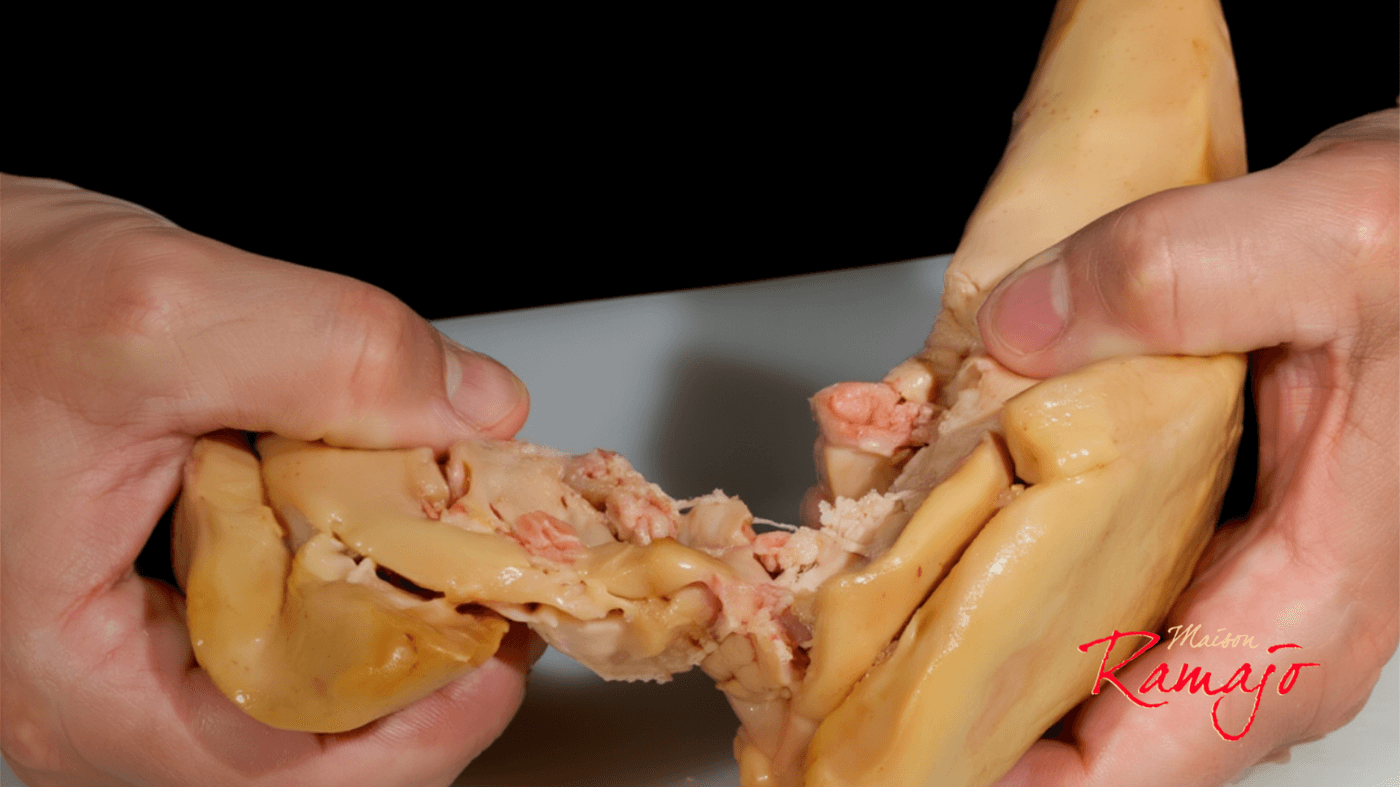
Start by separating the lobes by hand, pulling gently. This separation is often cleaner than a knife cut, which slices through the veins cleanly and makes the next steps more difficult.
Then set the small lobe aside and work on the large lobe first, which is easier to read and easier to devein, especially for beginners.
Deveining the large lobe of the foie gras
On the large lobe, you will find a main vein running lengthwise through the liver, and another deeper vein near the area where the small lobe was attached.
Start by making a small opening just above the visible vein, using the tip of a peeler or a round‑tipped tool. Then gently slide the tip under the vein and hold it lightly pinched between the tool and your thumb. Pull gently towards you in the direction of the already opened area, while holding the liver with your other hand. The movement should be steady and smooth, without any jerking. The idea is to work along the vein, making it slide through the opening, which limits tearing and helps keep the liver neat.

If a small piece of vein breaks off at the end, there is no need to insist. Simply pick up what remains visible, without forcing. The less the liver is damaged, the less it will melt during cooking: this is often what makes the difference between a well‑held terrine and one that ends up swimming in fat.
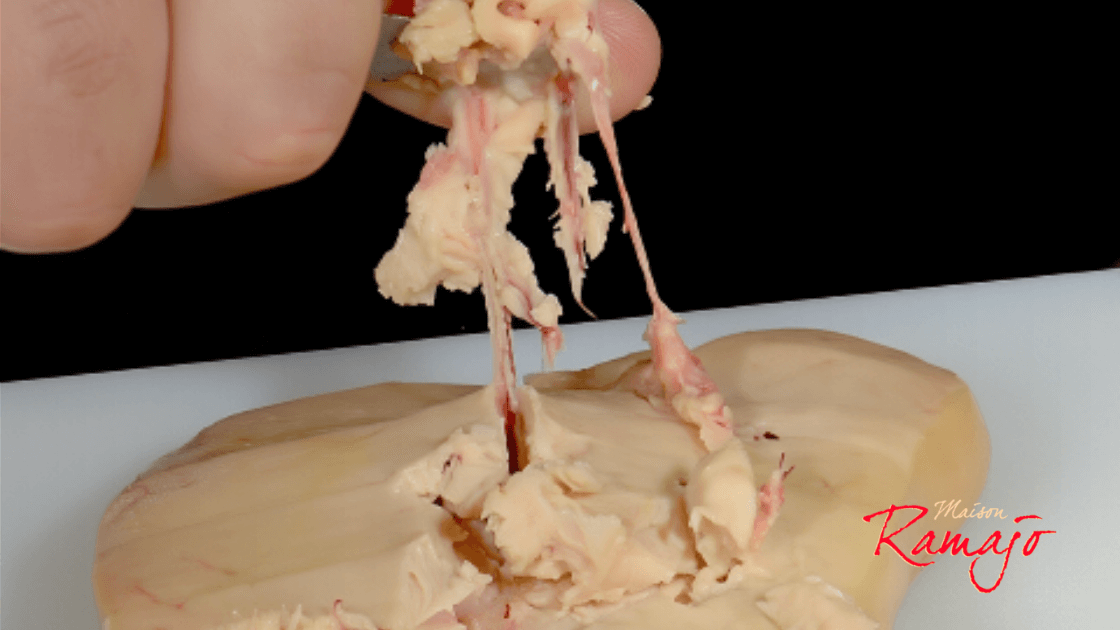
Mastering the small lobe (the most delicate) by following the right order
The small lobe is more delicate to work with. Its structure is more "tangled": the veins cross over each other more and going too fast often leads to breakage. You will generally find two main veins: a central vein and a vein located higher up. Always start by removing the middle vein, then the upper vein, as the latter partly runs underneath.
Proceed as follows:
First expose the vein by gently parting the flesh on each side using the tip of the peeler. Then grip the vein and pull gently with a steady movement, while holding the lobe with your other hand. The motion should remain smooth and controlled, without forcing.
A good deveining does not mean a liver that is 100 % intact. It means a liver that has been treated with care, never mishandled. If a tiny end of vein remains, it will rarely be noticeable after cooking, especially in a terrine or mi‑cuit.
How to reconstitute foie gras after deveining?
After deveining, the liver is often no longer intact. It has been handled, opened, sometimes slightly warmed, making it more fragile. Before seasoning and assembling it, the right approach is to firm it up again.
This is also the time to collect any small pieces that came off during the process. Nothing is wasted, as they integrate naturally during assembly or can be used to make a small terrine.
To firm up the liver, prepare a bowl of cold water with ice cubes and a generous handful of coarse salt, then plunge the deveined liver into it.
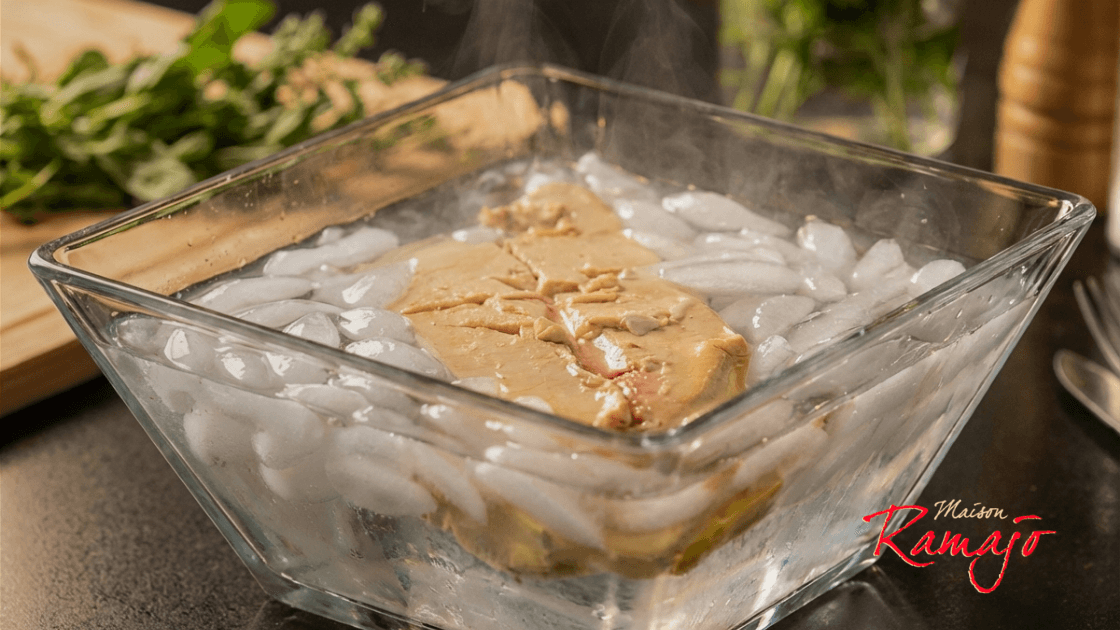
This bath helps to seize the liver, firm it up and make it more stable and easier to handle. Allow a minimum of thirty minutes, up to an hour if the liver has softened a lot. Then drain carefully and pat dry with kitchen paper: a well‑dried liver takes on seasoning better.
For a terrine, assembly remains straightforward. Place the large lobe at the bottom, then the small lobe on top, filling any gaps with the small pieces. Then press firmly but not excessively to avoid air bubbles. The liver will naturally bond together during cooking, without needing to aim for a perfect shape.
FAQ
What is the ideal temperature for deveining foie gras?
The ideal temperature is around 14 to 17 °C. At this temperature, the liver is supple enough to be deveined without breaking, while remaining firm enough not to collapse. Too cold, it cracks; too warm, it becomes fragile and difficult to handle.
Why devein foie gras?
Deveining removes the internal vein network, which can bring bitterness and an unpleasant texture after cooking. It is also what ensures a clean and uniform slice, especially in a terrine or mi‑cuit.
Is it mandatory to devein foie gras?
It is not strictly mandatory, but highly recommended for cooked preparations such as terrines or mi‑cuit. For pan‑seared foie gras, some cooks accept leaving some of the veins, as they are less visible. However, for foie gras served cold, deveining remains preferable.
How do you know when the deveining is successful?
A deveining is successful when the main veins have been removed without excessively damaging the liver. Very small ends may remain: they are rarely visible after cooking. A liver that has been handled too roughly will melt more, whereas a liver treated with care, even if imperfect, will produce a well‑held terrine.
How to serve foie gras?
Foie gras is ideally served cool but not ice‑cold, taken out of the refrigerator about fifteen minutes before tasting. Use a thin blade dipped in hot water for clean slices. Serve it simply, with quality bread, to let its texture and flavour speak for themselves.