


Farmers who are committed to offering products that are ethically produced, regulated under the best conditions for animal welfare, adhere to this charter developed by CIFOG.
In fact, in order to offer quality products to increasingly vigilant consumers, responsible and committed Foie Gras producers adhere to strict rules, from breeding to production and marketing. Their products can thus benefit from official labels, which are a guarantee of quality.
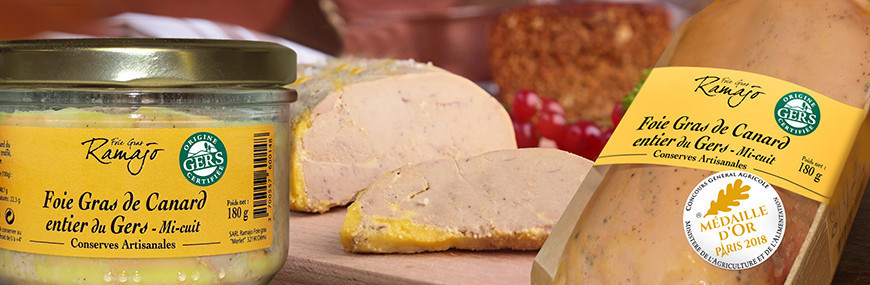
Protected Geographical Indication (PGI) Gers for foie gras 
The PGI is a European label that guarantees the geographical origin of at least one stage of production.
This highly demanding French label identifies products manufactured according to recognized rules and expertise. Obtaining the AOC label is subject to specific specifications. In addition, the designated geographical area must be respected. This rigorous monitoring enables producers to protect themselves against imitations and counterfeits.
The different presentations of foie gras: a quick reminder
Foie Gras is available for sale in several forms, either simply raw or processed and cooked in different ways. Here is a brief overview of the different presentations of Foie Gras.
Raw foie gras
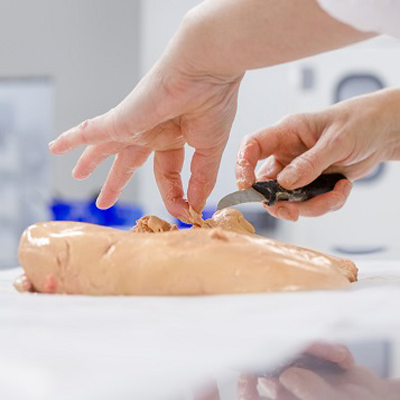
To be worthy of its name, raw foie gras (from duck) must weigh at least 300 grams. When purchased raw, it is prepared for immediate cooking or canning. It is usually simply pan-fried and served with a garnish: raw foie gras can only be kept in the refrigerator for a few days.
Semi-cooked foie gras
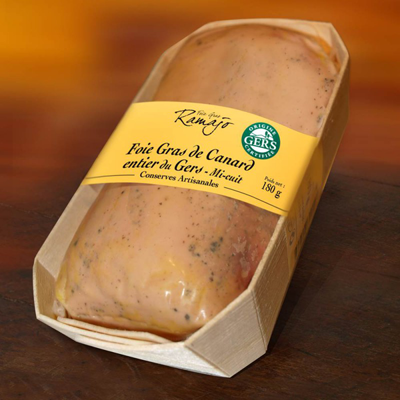
It is cooked at less than 100°C (pasteurization) and can be stored for 3 weeks to 6 months in a cool place. It comes in jars, terrines, trays, etc. It is often served simply on a slice of special bread, gingerbread or country bread and, depending on your taste, accompanied by a good wine from our regions.
Canned foie gras
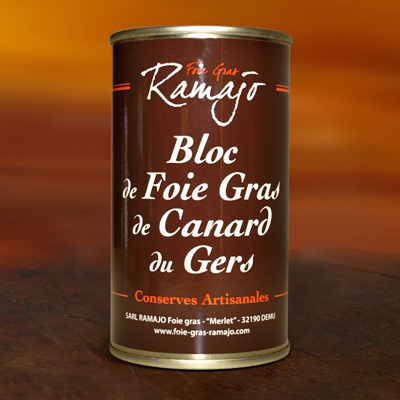
It is cooked at between 105 and 115°C (sterilization) and can be stored for a long time, sometimes several years. It is most commonly served on slices of toasted white bread, country bread, speciality breads, baguettes, and sometimes accompanied by berries, chutneys, and other compotes.
Foie gras is eaten at the beginning of a meal, when your taste buds are most receptive. But it is also very popular as a main course with a hot accompaniment.
The 5 golden rules for enjoying foie gras: 
Rule #1: temperature
In order to bring out all the subtle aromas and delicate flavors of foie gras, we recommend leaving it at room temperature for 30 to 50 minutes before tasting. If it is too cold, it loses much of its melt-in-the-mouth texture and aromas.
Rule #2: removing from the mold
To make it easier to remove from the container, quickly dip the container (jar, tray) of foie gras in hot water.
Rule #3: Slicing
To preserve its delicate texture, Foie Gras should be sliced carefully at the last minute with a very thin, smooth-edged knife. Between each slice, run the knife blade under hot water and wipe it dry. For perfect slices, you can use a butter knife (lyre).
Rule #4: Plating
Foie gras should be served on very cold plates. In terms of proportions, we recommend serving around 50 to 70 g per person as a starter, and 100 to 130 g as a main course... Food lovers can of course increase the portions.
Rule #5: tasting
Preserve your taste buds! Avoid drinks or foods with strong flavors, such as strong alcohols or salty crackers as an appetizer.
A rich but healthy dish "The Gers, Haute-Garonne and neighboring departments, which consume large quantities of duck fat, foie gras and confit, are less prone to cardiovascular problems. (Renaud, de Lorgeril, 1994, in "Le Régime santé" by Serge Renaud, published by Odile Jacob). This is what American researchers and Dr. Serge Renaud—a specialist in the field—have called the French paradox. Foie gras is rich in unsaturated fatty acids.
Their consumption is recommended in our diet because they have the effect of lowering bad cholesterol levels in the blood.
As a starter, ready-to-eat foie gras (semi-cooked or canned):
Allow between 60 and 80 grams of foie gras per person, not forgetting a few extra portions for those who are sure to want seconds...
For 80-gram starter portions, a light main course would be ideal, such as baked fish, pan-fried or barbecued duck breast, etc. If your foie gras is canned, place it in the refrigerator for 24 hours and take it out 15 minutes before serving.
Don't overlook the choice of bread to accompany your foie gras. For a successful starter, serve your foie gras with a small salad with fig chutney or onion confit. Discover our suggestions for breads to accompany foie gras here.
As a main course, pan-fried foie gras (raw or frozen)
Allow 130 grams of duck foie gras per person (compared to 115 to 120 grams of goose foie gras).
Foie Gras is often enjoyed with a sweet accompaniment: serve it with apples, pears, grapes, or mango. If you prefer savory flavors, it goes very well with Sarladaise potatoes, mushrooms, or onion confit.
Finally, to delight your guests' taste buds, don't forget to find the right pairing between your dish and the wine you serve.
With foie gras, you are probably used to serving sweet white wines such as Sauternes, Monbazillac, or Gewurztraminer, which are perfect. But did you know that certain red wines could pleasantly surprise your guests?