

Serving foie gras at a meal is always synonymous with refinement and gourmet pleasure. Yet one question comes up every time we prepare a festive meal: how much foie gras should you plan per person?
As breeders, farmers, and artisan preservers in the Gers for several generations, we prepare and serve foie gras all year round, whether in our farm restaurant in Dému or during our cooking workshops. Needless to say, we know the question of quantities inside and out. Here are our benchmarks to help you perfectly portion your foie gras, from a simple appetizer toast to a main course.
Portions to remember depending on the meal course
Before going into detail, here are the essential benchmarks we use ourselves when hosting at the farm:
| Meal moment | Amount per person | Example for 8 guests |
|---|---|---|
| Aperitif (canapés, toasts) | 15 to 20 g | 120 to 160 g |
| Classic starter | 50 to 70 g | 400 to 560 g |
| Generous starter (foie gras alone with bread and chutney) | 70 to 80 g | 560 to 640 g |
| Main course (pan-seared foie gras) - duck | 120 to 130 g | 960 g to 1 kg |
| Main course (pan-seared foie gras) - goose | 110 to 120 g | 880 g to 960 g |
Always plan for two or three extra portions for guests who won't hesitate to go back for seconds. It's a habit we've picked up after seeing plates held out for a second slice more than once.
How to choose the right type of foie gras?
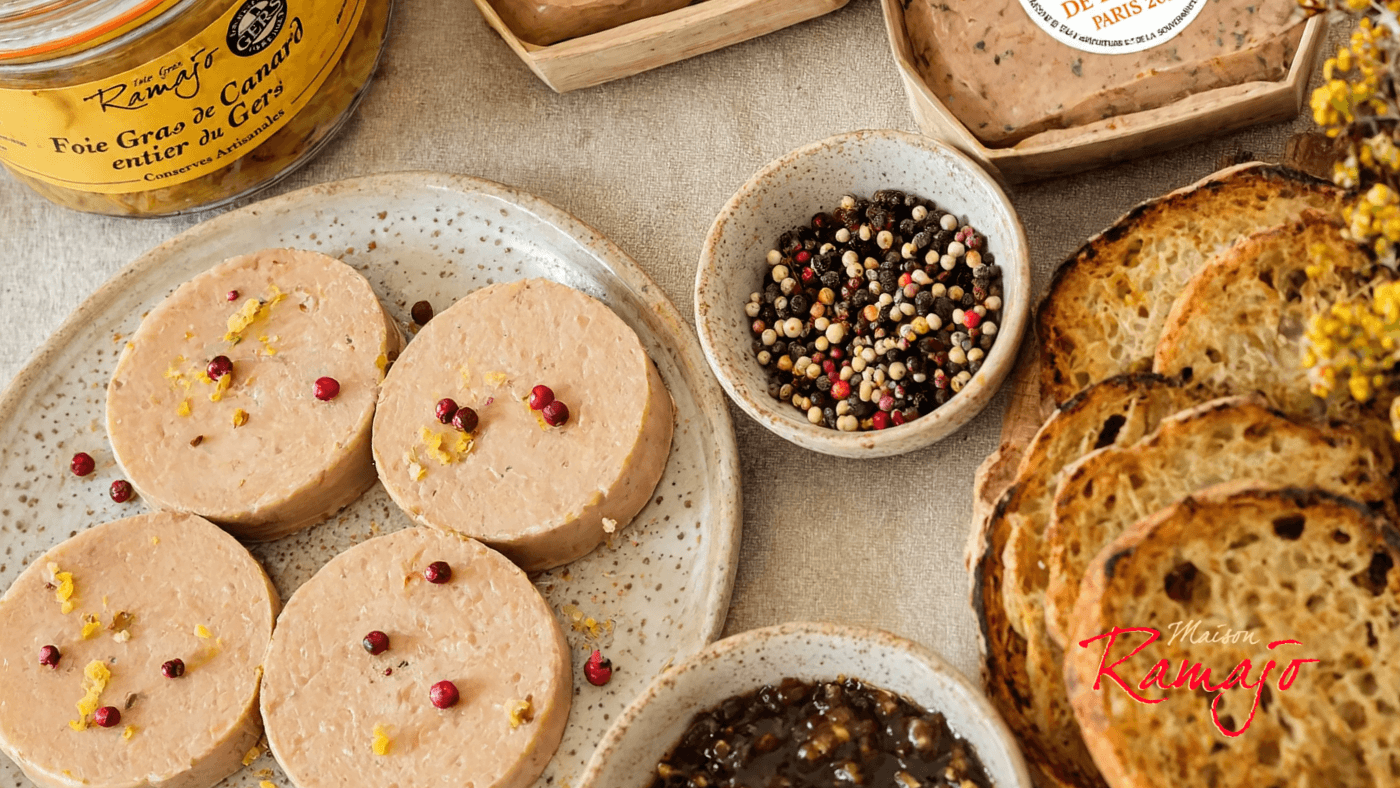
The amount to plan also depends on the type of foie gras you'll be serving. Each preparation has its own uses and natural portion sizes. Here's an overview to help you make the right choice.
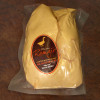
The whole foie gras is made up of one or more lobes from a single liver. It's the most prestigious version. It's served in thick slices, accompanied by brioche bread or lightly toasted country bread. If you're looking for a whole duck foie gras from the Gers or a whole goose foie gras from the Gers, our house crafts them artisanally from our own farms.
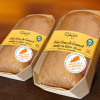
The semi-cooked foie gras is cooked at low temperature, which gives it a melting texture and more intense aromas than canned foie gras. It's enjoyed as a terrine or torchon and is particularly suited to starters where foie gras takes center stage. Our whole semi-cooked duck foie gras is one of our flagship products for Christmas and New Year's meals.
The foie gras block is a homogeneous preparation made from reconstituted foie gras. It's a more economical option, ideal for aperitifs and toasts. Its smooth texture spreads easily and allows you to control quantities down to the gram.
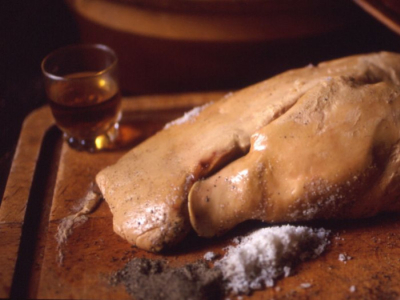
The raw foie gras is the unprepared version, straight from our workshop. It's the choice for those who want to make their own homemade terrine or prepare a pan-seared foie gras. Note: raw foie gras loses weight during cooking (about 30%), so you need to plan for more generous portions to start with.
How much foie gras for an aperitif?
This is a moment often forgotten in portioning guides, even though foie gras lends itself wonderfully to the aperitif. Served on small gingerbread canapés or in verrines, it opens the meal with elegance without weighing down guests.
Count on 15 to 20 grams per person, or about 200 grams for a dozen guests. That's two to three bites per guest, just enough to awaken the palate before moving to the table.
Quantity of foie gras for a starter
The starter is the most classic moment to enjoy semi-cooked or canned foie gras. The ideal portion is between 50 and 70 grams per person if the foie gras is served with accompaniments (salad, chutney, onion confit, fresh figs). If you're serving it alone with bread, go up to 70 or 80 grams so as not to leave your guests wanting.
A small nuance we often observe here in the Gers: when the meal that follows is particularly hearty (cassoulet, duck confit, grilled magret), stick to 40 to 50 grams of foie gras as a starter. The goal is to delight the palate without overwhelming it before the main course.
As for bread, the choice matters. Lightly toasted country bread, fig bread, or gingerbread are the best companions for foie gras as a starter. If you'd like to explore this further, we've written a complete guide on which bread to pair with foie gras.
For slicing, dip your knife blade in hot water between each slice. You'll get clean slices about 1.5 cm thick, without crushing the texture of the foie gras. If you have a foie gras cutting wire (a "lyre"), even better.
Quantity of foie gras for a main course
Foie gras as a main course is the great classic of southwest France. It's served pan-seared, seared for a few minutes on each side in a very hot pan, and accompanied by generous garnishes.
Plan for 120 to 130 grams of raw duck foie gras per person, or 110 to 120 grams if you opt for goose foie gras, which remains more stable when cooked and loses less mass. These are substantial portions, but pan-seared foie gras is a dish in its own right - it deserves to be served generously.
The classic accompaniments that work best: Sarlat-style potatoes sautéed in duck fat, an apple or pear compote, sweet onion confit, or sautéed seasonal mushrooms. If you're a fan of the famous Tournedos Rossini (a beef fillet topped with a pan-seared foie gras escalope), plan for 60 to 80 grams of raw foie gras per person, since it accompanies the meat rather than being the dish on its own.
Goose or duck foie gras: are the quantities the same?
No, and this is a subtlety that many guides forget to mention. Duck foie gras and goose foie gras are not portioned in exactly the same way.
Duck foie gras has a bolder flavor and a slightly more rustic texture. It also tends to melt more during cooking, which means you need to plan for slightly larger portions to start with.
Goose foie gras is more delicate, more subtle, and remains more stable when pan-seared. It's also traditionally considered more prestigious. Portions can therefore be a little smaller, not only because it loses less during cooking, but also because its rich flavor satisfies the palate more quickly.
As a starter, the difference is minimal (a few grams more for duck). As a pan-seared main course, it's more pronounced: 120 to 130 g for duck versus 110 to 120 g for goose.
For what occasions should you prepare foie gras?
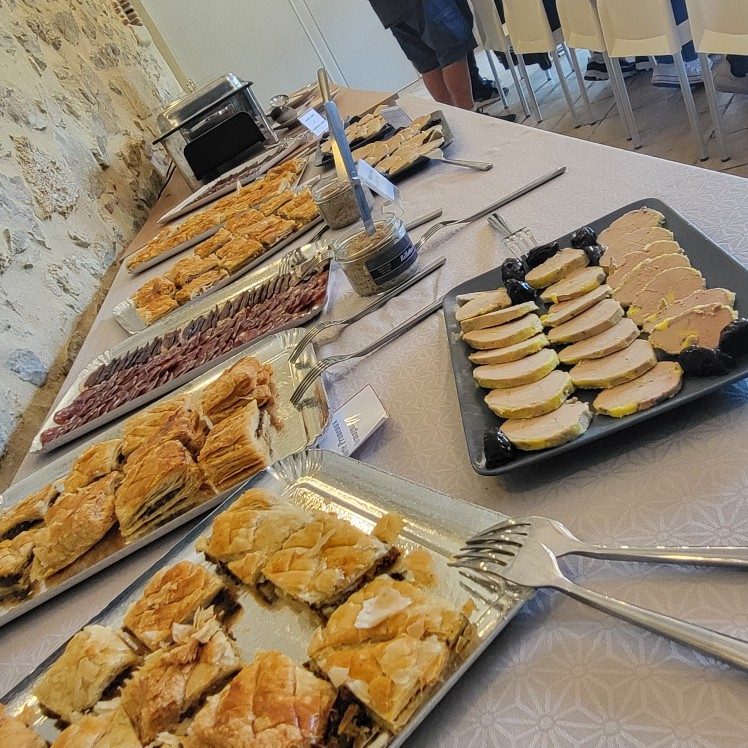
Foie gras is traditionally associated with the end-of-year holidays. It holds a privileged place on Christmas and New Year's tables, where it opens the meal with distinction. But here in the Gers, we don't limit ourselves to the holidays: foie gras is just as fitting for a birthday as for a get-together with friends on an autumn Sunday.
Family events such as weddings, christenings, or large family gatherings are also perfect occasions to serve foie gras. For these events, consider our gourmet gift boxes, which let you put together a varied assortment to please every palate at the table.
In more formal settings, foie gras enriches gastronomic meals and business lunches. At these tables, it's often goose foie gras that's preferred for its finesse and prestigious image.
What wine to serve with foie gras?
Food and wine pairing plays an important role in the tasting experience. The classic choice remains a sweet white wine: a Jurançon, a Pacherenc du Vic-Bilh, or a Sauternes. These wines bring a sweetness that pairs naturally with the richness of foie gras.
But did you know that certain light, fruity red wines can also pair beautifully with foie gras? A young Madiran or a well-balanced red from the southwest can create a pleasant surprise for your guests. We offer a selection of southwest red wines and Gascony white wines chosen to accompany our products.
For the aperitif, a glass of Armagnac from the Gers can also create a surprising and authentically Gascon pairing.
How long can you keep foie gras?
To avoid waste and get the most out of your foie gras, storage is an essential point.
Raw foie gras is a fresh product that should be consumed quickly after purchase, ideally within two to three days of receiving it. Store it in the refrigerator between 2 and 4°C.
Semi-cooked foie gras keeps for several weeks in the refrigerator as long as it's unopened (check the date on the packaging). Once opened, consume it within 48 hours to enjoy its full freshness and melting texture.
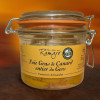
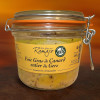
The canned foie gras is the most practical for planning ahead. It keeps for several years in a cool, dry place, and even gains aromatic complexity over time, a bit like a good wine. Once opened, consume it within three to four days.
An opened foie gras block keeps for two to three days in the refrigerator, well wrapped in film. That's why we recommend carefully calculating your quantities in advance: the table at the top of this article is here for exactly that.
Frequently asked questions
How much foie gras should you plan for 10 people as a starter?
For 10 guests as a starter, plan for 500 to 700 grams of semi-cooked or canned foie gras. If the meal that follows is light, go with 700 g. If a hearty dish is planned afterward, 500 g will be plenty.
Can you freeze foie gras to avoid waste?
Raw foie gras freezes well for two to three months. Semi-cooked or canned foie gras, on the other hand, doesn't need to be frozen since its shelf life is already long. We don't recommend freezing an already-opened semi-cooked foie gras, as the texture would suffer.
How much foie gras for a Tournedos Rossini?
For a Tournedos Rossini, count on 60 to 80 grams of raw foie gras per person. The foie gras slice, about 1.5 cm thick, is pan-seared separately and then placed on the beef fillet just before serving.
Should foie gras be served cold or at room temperature?
Take your semi-cooked or canned foie gras out of the refrigerator about 15 to 20 minutes before serving. It should be cool but not cold, so the aromas can fully express themselves on the palate.