

A cocktail party, a New Year's Eve celebration with loved ones, a birthday you want to make special: a well-prepared foie gras toast is often all it takes to set the tone for an exceptional moment. Simple in appearance, this little bite actually involves a number of key decisions: the type of foie gras, the bread, the garnish, the serving temperature. Every detail matters to make that first bite truly memorable.
At Maison Ramajo, an artisan foie gras producer in the Gers region for over 40 years, we know that the success of a toast depends as much on the quality of the product as on the care that goes into preparing it. In this guide, we share our producer's tips, our favorite recipes and our pairing suggestions so that your foie gras toasts live up to your gourmet ambitions.
Which foie gras should you choose for successful toasts?
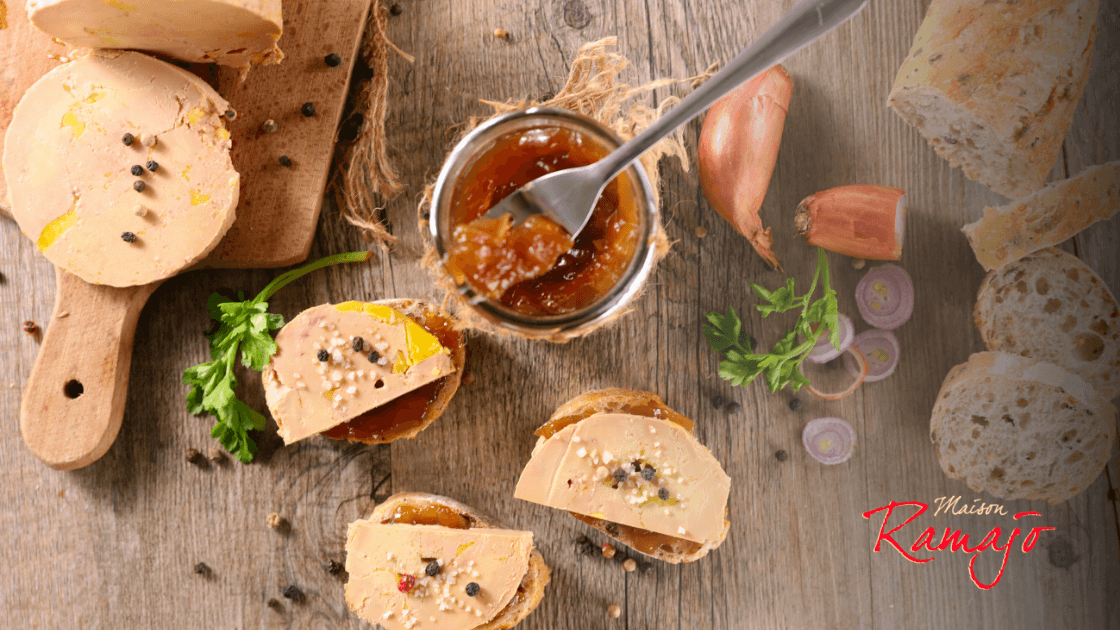
The choice of foie gras determines everything else. It is not simply a matter of slicing a product and placing it on bread: each type of foie gras has its own texture, its mouthfeel and its behavior when cut, all of which directly influence how your toasts turn out.
Whole foie gras, mi-cuit or bloc: the differences for a toast
Whole foie gras is the most premium product. Made from a single, whole liver, it offers a melt-in-the-mouth texture and a complex flavor that speak for themselves on a toast. In preserved or mi-cuit form, it slices cleanly and holds perfectly on bread. It is the ideal choice for starter toasts where foie gras is the star of the plate.
Mi-cuit foie gras stands out thanks to its gentle cooking method (pasteurization), which preserves a supple texture and a particularly delicate taste. On a toast, it melts slightly on contact with warm bread and releases intense aromas. It is the go-to choice for a fresh tasting, as a starter or at aperitif time.
Bloc de foie gras is a blend of emulsified pieces. Smoother and easy to spread, it is perfectly suited to appetizer toasts in larger quantities: you can spread it with a spatula or a knife, making it quick to prepare a large number of bites. Its more accessible price point makes it a valuable ally for big gatherings.
Our recommendation: for a casual appetizer spread serving many guests, go with the bloc. For a festive meal where each toast is served individually, choose whole mi-cuit foie gras.
Duck or goose foie gras: how to choose?

Duck foie gras is the most common in France. Its flavor is bold, assertive, slightly rustic. It pairs well with pronounced garnishes such as onion confit, fig chutney or freshly ground pepper.
Goose foie gras is more delicate, more subtle, with a silky texture and a remarkable smoothness. On a toast, it calls for more refined accompaniments: a touch of fleur de sel, a drizzle of acacia honey or a few shards of dried fruit.
For foie gras toasts, both work perfectly. Duck brings a bolder character that stands up well to generous garnishes, while goose shines in simplicity.
The foundations of a perfect foie gras toast
Before moving on to the recipes, let's cover the fundamentals. A successful foie gras toast rests on three pillars: the bread, the toasting and the thickness of the slice.
Which bread should you use?
Bread is the foundation of the toast. The choice is not trivial, as it must support the foie gras without masking it.
Pain de mie (white sandwich bread) is the absolute classic. Neutral in flavor, it puts the foie gras in the spotlight. Choose a bakery-made pain de mie, denser and more flavorful than store-bought versions. Cut it into squares or triangles for a polished presentation.
Pain d'épices (gingerbread) creates a natural sweet-savory pairing with foie gras. It is a beloved classic of the holiday season. Choose a soft gingerbread that is not too sweet, to avoid throwing off the balance of the tasting.
Brioche, lightly buttery and sweet, provides a tender base that pairs harmoniously with mi-cuit foie gras. Be careful not to toast it too much: it burns quickly.
Pain de campagne (country bread) adds character with its dense crumb and rustic crust. It is particularly well suited to duck foie gras and rustic garnishes (onion confit, cracked pepper). Our comprehensive guide to foie gras also offers bread suggestions for each type of tasting.
To toast or not: the importance of texture
A toast is, by definition, grilled. But the degree of toasting makes all the difference. Bread that is too toasted will be dry, brittle, and will make the bite difficult to eat. Bread that is barely warmed will lack contrast with the foie gras.
The ideal is a light to medium toast: the bread should be crispy on the surface but still soft inside. This dual texture creates a pleasing contrast with the smoothness of the foie gras.
A few practical tips:
- Toast the bread at the last moment so it stays crispy when served.
- Let the toasts cool for 2 to 3 minutes before placing the foie gras, otherwise the heat will melt it prematurely.
- For gingerbread, a brief pass through the oven (180 °C, 3 minutes) is enough to firm it up without drying it out.
The right thickness for a foie gras slice
The thickness of the foie gras slice determines the balance in the mouth. Too thin, and it disappears behind the bread. Too thick, and it overwhelms the palate and hides the garnishes.
For an appetizer toast, aim for a slice 8 to 10 mm thick. For a plated starter with a larger toast, go up to 12-15 mm.
To get clean slices, dip your knife blade in hot water between each cut. This simple step makes all the difference, especially with mi-cuit foie gras, whose smooth texture can stick to a dry blade.
5 foie gras toast recipes for every occasion
Here are five tried-and-tested recipes, from the most classic to the most creative, to bring variety all year round.
1. Classic foie gras toast with onion confit

This is the most popular combination, and for good reason: the sweet-savory balance of onion confit enhances the richness of the foie gras without ever masking it.
Preparation: Lightly toast a slice of pain de mie. Spread a thin layer of onion confit, then place a slice of whole duck foie gras on top. Finish with a twist of the pepper mill and a pinch of fleur de sel.
Producer's tip: the onion confit should remain subtle. A level teaspoon per toast is more than enough. The foie gras must remain the main character.
2. Foie gras toast with fig and honey

The combination of fig and honey with foie gras is a classic of South-West France. The sweetness of the fruit and the roundness of the honey create a silky balance on the palate.
Preparation: On a warm brioche toast, place a slice of mi-cuit duck foie gras. Add a quarter of fresh fig (in season) or a small spoonful of fig jam. Finish with a drizzle of Gascon honey and a few walnut pieces.
Off-season variation: replace the fresh fig with a fig chutney, which you will find among our artisan accompaniments.
3. Foie gras toast with mango chutney
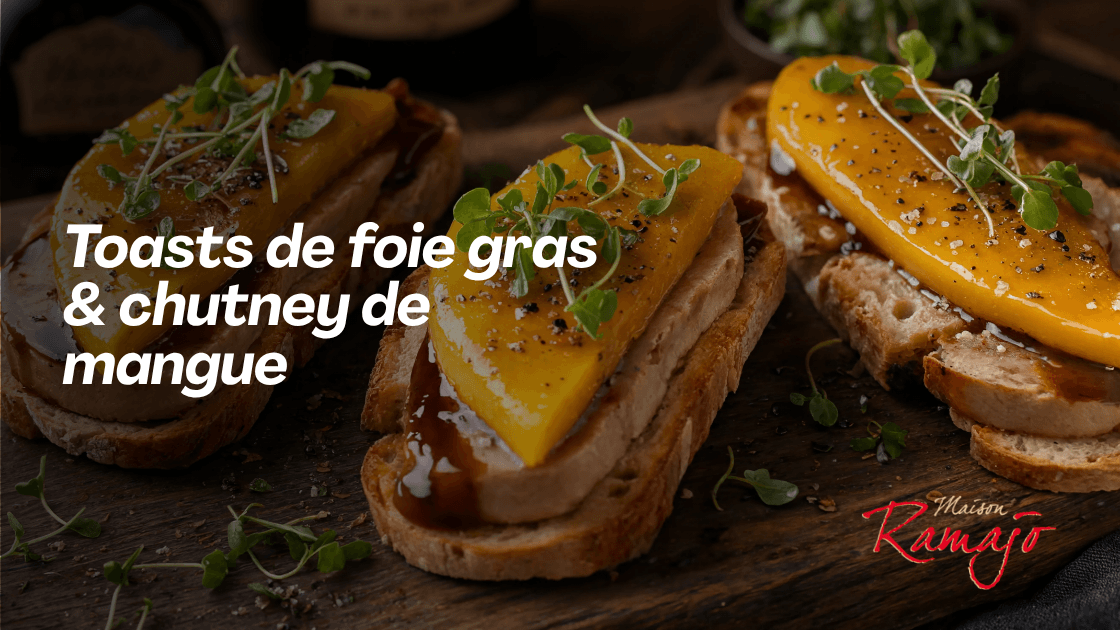
More exotic, this pairing works remarkably well. The acidity and freshness of the mango lighten the richness of the foie gras and bring a touch of originality. As highlighted in our article on accompaniments for duck foie gras, chutneys are among the most successful sweet-savory pairings.
Preparation: Toast a slice of country bread. Spread a thin layer of mango chutney. Place a slice of duck foie gras bloc on top. Scatter a few pink peppercorns and a sprig of fresh cilantro.
Tip: this recipe is particularly well suited to a summer appetizer or a brunch.
4. Foie gras toast with smoked duck breast and arugula
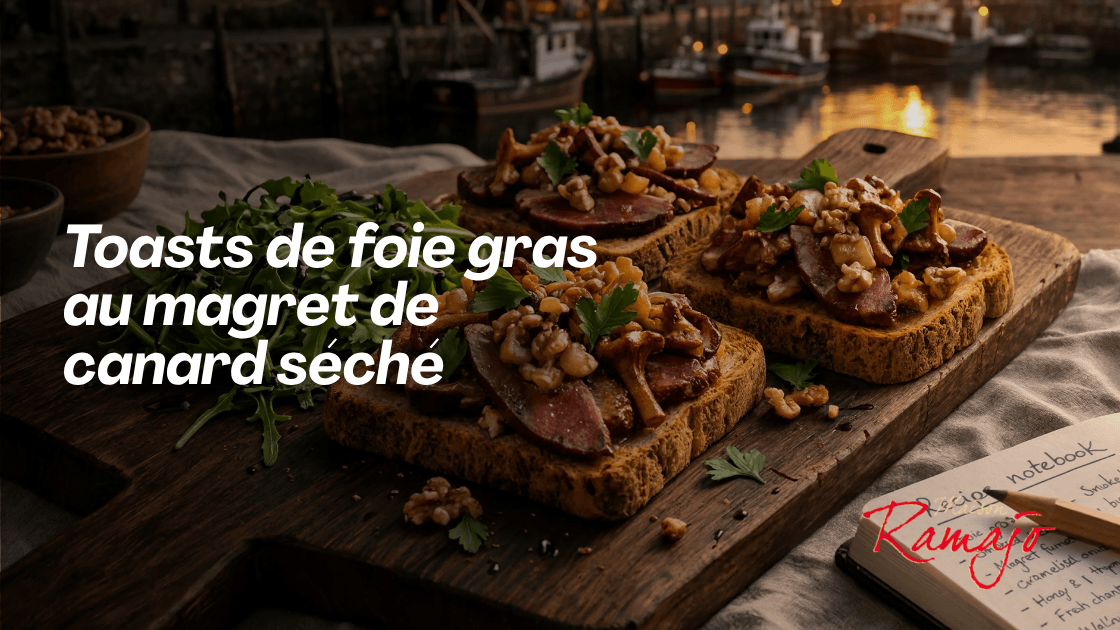
This generous toast brings together two jewels of Gascon duck cuisine: foie gras and magret. The arugula adds a fresh bitterness that balances the whole.
Preparation: Toast a slice of country bread. First lay down a thin slice of dried or smoked duck breast, then a slice of whole duck foie gras. Add a few arugula leaves, a drizzle of balsamic vinegar and a pinch of fleur de sel.
Tip: slice the duck breast very thinly so it does not overpower the texture of the foie gras.
5. Foie gras toast with Sauternes jelly
Sauternes is one of the classic pairings for foie gras. Turning it into a jelly to incorporate directly onto the toast is an elegant way to marry the two in every bite.
Preparation: Prepare a Sauternes jelly (200 ml of Sauternes, 2 gelatin sheets, 1 tablespoon of sugar). Refrigerate for 4 hours until set. On a pain de mie toast, place a slice of whole goose foie gras, then a spoonful of jelly cut into small cubes. Finish with a pinch of fleur de sel de Guérande.
Tip: this recipe is particularly well suited to goose foie gras, whose finesse pairs perfectly with the sweetness of Sauternes.
Pairings and accompaniments for your toasts
Which wine to serve with foie gras toasts?
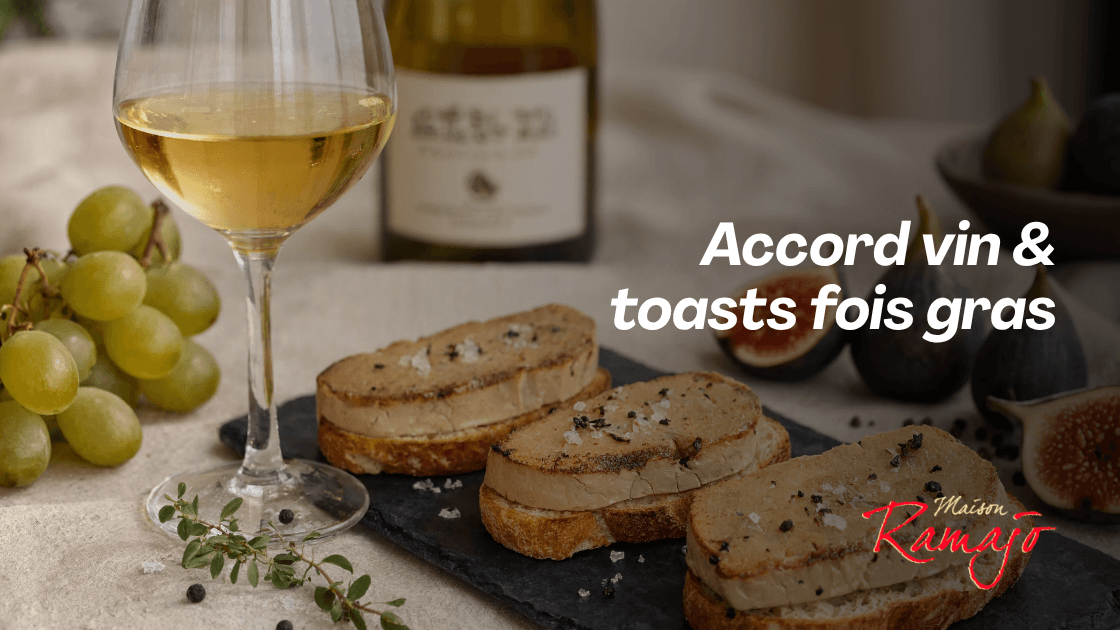
Wine and foie gras pairing is a topic that excites food lovers. Here are the main families of pairings that work with foie gras toasts:
A sweet white wine remains the classic, timeless pairing. A Jurançon, a Pacherenc du Vic-Bilh or a Sauternes brings the sweetness needed to envelop the foie gras without overpowering it. It is the safest choice for a foolproof match. Discover our white wines from Gascony for an authentic regional pairing.
Brut or extra-brut Champagne is a more modern pairing, very popular at aperitif time. The effervescence and acidity of Champagne cleanse the palate between bites and create a stimulating contrast with the richness of the foie gras.
A light red wine may come as a surprise, but a Pinot Noir from Alsace or a red Floc de Gascogne pairs very well with a foie gras toast topped with fruity garnishes. Our red wines from South-West France offer interesting options for this pairing.
For an aperitif, a glass of Armagnac at the end of the tasting extends the pleasure with a warm, quintessentially Gascon note.
The accompaniments that make the difference
Beyond the garnishes built into the recipes, a few details significantly elevate a foie gras toast:
Fleur de sel is essential. Added at the very last moment, it bursts on the palate and awakens the flavors of the foie gras. Choose fleur de sel from Guérande or Île de Ré.
Pepper should be cracked or ground at the last minute. Timut pepper (citrus notes) or Sarawak pepper (woodier) bring a touch of originality compared to classic black pepper.
Fresh herbs such as thyme leaves or finely snipped chives add freshness and color to your toasts. Use them sparingly so as not to mask the flavor of the foie gras.
Presentation and serving tips
Preparing your toasts ahead of time: what you need to know
It is tempting to prepare all your toasts in advance so you can enjoy time with your guests. It is possible, but with a few precautions.
The bread can be toasted 1 to 2 hours ahead and kept at room temperature in a clean kitchen towel. It will lose a little crispness but will still be fine.
The foie gras can be sliced in advance and stored in the refrigerator on a plate covered with plastic wrap. If your foie gras is preserved, remember to place it in the refrigerator 24 hours before tasting, then take it out 10 to 15 minutes before serving so it returns to a supple texture.
However, the final assembly (foie gras on toast, garnish) should be done at the last minute. A toast assembled too early will go soft and lose its appeal. Allow 10 to 15 minutes for plating just before service.
Serving temperature and plating
Foie gras should be enjoyed cool but not ice-cold. The ideal temperature is between 8 and 12 °C. Too cold, and it will be firm with muted flavor. Too warm, and it will melt and lose its shape on the toast.
For plating, arrange your toasts on a wooden board, a slate or a large white serving dish. Space them out enough so that each toast is visible and easy to pick up. A few salad leaves, grape clusters or dried fruits placed around the toasts add color and a sense of abundance to your presentation.
How much to prepare: plan on 3 to 4 toasts per person for an appetizer, and 60 to 80 grams of foie gras per guest for a starter. Always prepare a few extra portions: there are always enthusiasts who come back for more.
Over to you
The foie gras toast is one of the simplest and most elegant bites in French gastronomy. With a quality artisan product, well-chosen bread and a carefully balanced garnish, each toast becomes an invitation to a culinary journey through South-West France.
Browse our range of duck foie gras and our selection of goose foie gras to find the product that will elevate your next toasts. And if you are looking for more recipe ideas, explore our recipe blog to discover all the ways to cook with foie gras.
FAQ: Foie gras toasts
How many toasts should I plan per person for an appetizer?
For a cocktail-style appetizer, plan 3 to 5 foie gras toasts per person, alongside other bites. If foie gras is the only savory option, increase to 5-6 toasts. For a plated starter, 2 to 3 generous toasts are enough, served with a small side salad.
Can you freeze foie gras toasts?
Freezing assembled toasts is not recommended: the bread will become soggy when thawed and the foie gras will lose its texture. However, mi-cuit foie gras in a vacuum-sealed tray keeps very well in the refrigerator for several weeks before opening. Prepare your toasts at the last minute using a properly stored product rather than freezing them.
Which Ramajo foie gras should I choose for toasts?
For a large appetizer spread, our duck foie gras bloc is the most practical choice: it spreads easily and offers excellent value. For a refined starter or upscale appetizer, choose our whole mi-cuit duck foie gras, which slices perfectly and delivers an incomparable flavor. For an exceptional occasion, our whole goose foie gras will bring a unique finesse and smoothness.
When is the best time of year to serve foie gras toasts?
Foie gras is often associated with the holiday season, but it can be enjoyed all year round. In spring and summer, go for fresh toasts with fruity garnishes (fig, mango, grape). In fall and winter, warmer pairings (onion confit, gingerbread, wine jelly) are in season. Our preserved and mi-cuit foie gras are available year-round in our online shop.