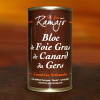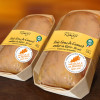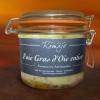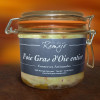


It's the question thousands of food lovers ask themselves every year when planning a festive meal, preparing a dinner-style aperitif, or simply treating themselves: should you choose goose foie gras or duck foie gras?
At Maison Ramajo, we have been producing both artisanally for more than 40 years in the Gers, the historic cradle of foie gras in France. We know them intimately, from the farm to the jar. That is why, in this article, we will give you all the keys to understanding the differences between goose and duck foie gras, and above all to choosing the one that will best suit your occasion.
Goose foie gras and duck foie gras: what are the differences?

Before getting into recommendations, it is essential to understand what really sets these two products apart. The differences are many: taste, texture, colour, behaviour in the kitchen. Neither is objectively "better" than the other; each has its own qualities and preferred uses.
Taste: two distinct aromatic profiles
This is the most striking difference, the one you will notice from the very first bite.
Duck foie gras has a bold, assertive taste, with an aromatic power that lingers in the mouth. It is known for its slightly rustic notes, its earthy character and its pronounced length on the palate. It is a foie gras that makes itself heard and pairs beautifully with pronounced accompaniments such as onion confit, fig chutney, cracked pepper or pain d'épices (French spiced bread).
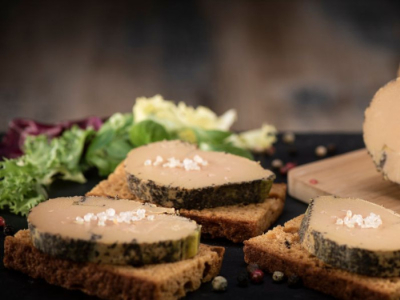
Goose foie gras, more subtle, wins you over with its softness and finesse. Its delicately buttery notes come through with elegance and call for simple pairings: a pinch of fleur de sel and lightly toasted bread are enough to bring it out.
Texture: silky melt versus character
Texture is the other major point of difference.
Goose foie gras has an exceptional melt-in-the-mouth quality. On the palate, it dissolves almost instantly, leaving a silky, enveloping sensation. This unique texture makes it the favourite for pure tastings, where the foie gras is simply placed on a piece of toast and enjoyed as is. Our whole goose foie gras from the Gers perfectly illustrates this quality. Discover our foie gras toast recipes.
Duck foie gras, more structured, has a slightly firmer texture. It offers a pleasant hold in the mouth before melting, which makes it particularly suited to cooking, especially pan-searing.
Colour and appearance when sliced
The two products are also visually distinct.
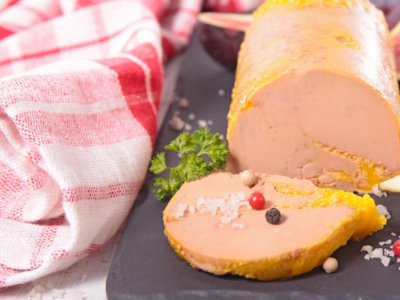
Goose foie gras has a pale colour, ranging from pinkish beige to ivory, with a uniform cross-section and a smooth, almost pearlescent surface. Duck foie gras, by contrast, has a deeper colour, in pink to ochre tones, sometimes lightly veined, with a more rustic appearance that reflects its bolder flavour.
These visual differences in no way affect the quality of the product. They simply reflect the distinct nature of the two birds and the fat composition of their livers.
Whole, mi-cuit, block: the formats available in goose and duck
Whether you choose goose or duck, foie gras comes in several preparation formats. Each has its specific features and uses. Our guide to choosing your foie gras covers every format in depth, but here are the essentials.
Whole foie gras is the noblest format: it is made from a single liver, without any blend, and offers an uneven but natural texture with a beautiful hold when sliced. It comes either in preserves for long shelf life, or as mi-cuit — fresher and more meltingly tender.
Mi-cuit foie gras, pasteurised at a low temperature, is the closest to the raw product. It is enjoyed fresh, often on bread, and lets you fully appreciate the aromas — especially the finesse of goose or the power of duck. Foie gras block, finally, is a more uniform, easy-to-spread preparation. More affordable, it is ideal for aperitifs or cooking, even if it is less refined than whole foie gras.
Which foie gras for which occasion?
This is often the most useful question: beyond personal taste, which foie gras should you choose depending on the context? Here are our producer's recommendations.
For a festive meal or a grand occasion
Christmas Eve, a milestone birthday, a wedding meal: for those moments when every detail counts, whole goose foie gras is the most elegant choice. Its finesse, its exceptional silkiness and its rarity make it a prestige product that always impresses guests.
Serve it simply sliced on lightly toasted white bread or country bread, with a pinch of fleur de sel. Goose foie gras stands on its own and needs no elaborate garnish to shine.
If your budget is tighter or you are hosting a large number of guests, whole preserved duck foie gras is a remarkable alternative. Its bold character makes a strong impression and it slices beautifully for plated service. As explained in our complete guide to foie gras, plan for 60 to 80 grams per person for a starter.
For a dinner-style aperitif or toasts
The dinner-style aperitif is the ideal playground for duck foie gras. Its sustained character allows it to hold its own alongside generous garnishes: onion confit, mango chutney, fig and honey, smoked duck breast. Even on a small toast, it makes itself heard.
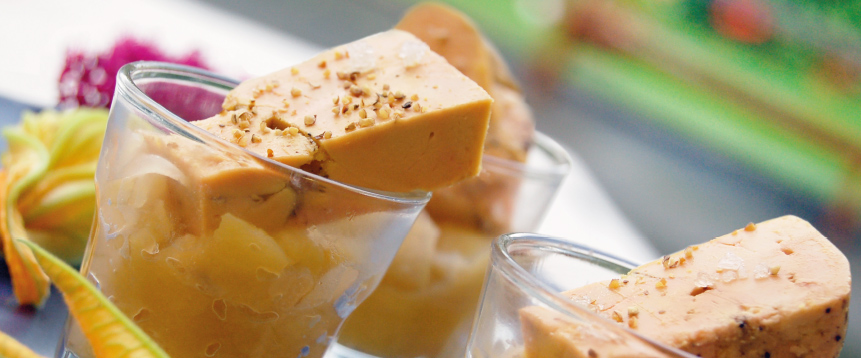
For an aperitif with many guests, the duck foie gras block is the most practical choice: it spreads quickly and offers excellent value for money. For a more refined aperitif with individual toasts, whole mi-cuit duck foie gras slices cleanly and holds up well on the bread.
Goose foie gras, more delicate, is better suited to understated toasts served in smaller quantities: white bread, fleur de sel, perhaps a Sauternes jelly. It will be best appreciated in a calm setting where guests can focus on the tasting.
For cooking: pan-seared, in terrine, in sauce
In the kitchen, duck foie gras is king. Its firmer texture stands up better to heat and it develops intense flavours during cooking.
Pan-seared duck foie gras is a great classic: quickly seared in a very hot pan, it forms a golden, crispy crust on the outside while remaining meltingly soft at the heart. Discover our 3 ways to cook raw foie gras to master this technique. Tournedos Rossini is one of the iconic recipes that showcases pan-seared duck foie gras.
In terrine, both work, but duck is more common and more approachable for home preparation. Our mi-cuit terrine with Armagnac recipe guides you step by step.
In sauce, duck foie gras brings body and richness. A few cubes of foie gras melted into cream with a veal stock transform a simple magret into an exceptional dish. Find this technique in our 3 gourmet recipes with whole foie gras.
Pan-seared goose foie gras is more delicate to get right (it melts faster), but experts appreciate its incomparable finesse once mastered.
Food and wine pairings: goose vs. duck
Wine and foie gras pairing is an endless topic. While the two types of foie gras share certain pairings, their distinct aromatic profiles call for slightly different choices.
Wines for goose foie gras
The finesse of goose calls for elegant wines that will not overpower it. Sauternes is the historic pairing and probably the most harmonious: its sweetness and its notes of candied fruit envelop goose foie gras in a perfect balance.
A sweet Jurançon or a Pacherenc du Vic-Bilh also work very well, with an added touch of freshness. Extra-brut champagne, with its minerality and fine bubbles, is a modern pairing that highlights the silky texture of goose.
Discover our white wines from Gascony for an authentic regional pairing with your goose foie gras.
Wines for duck foie gras
The bolder character of duck opens up a wider range of pairings.
Sweet white wines remain a safe bet. A sweet Côtes de Gascogne or a Monbazillac pairs perfectly with the power of duck, creating a beautiful sweet-savoury balance.
Light red wine is a more daring but very successful pairing with duck foie gras. An Alsace Pinot Noir, a red Floc de Gascogne or a young Madiran bring a tannic structure that dialogues with the fattiness of the liver without dominating it. Explore our red wines from the South-West to try this pairing.
Finally, to extend the tasting, a glass of Armagnac from the Gers at the end of the meal creates a warm, typically Gascon pairing, particularly successful after duck foie gras.
Price: a justified difference?
Goose foie gras is noticeably more expensive than duck. This is not by chance, and this price difference is rooted in very concrete farming realities.
Raising geese takes longer, is more demanding and more costly than raising ducks. Geese are larger animals, slower to fatten, and foie gras yields are lower. Goose production represents less than 5% of total foie gras production.
This rarity, combined with a higher production cost, explains why goose foie gras is positioned as a premium product. Is it justified? From a taste standpoint, it is not a question of "better" or "worse", but of a different profile.
Goose offers a unique experience that duck cannot reproduce, and vice versa.
If you would like to discover both, our gourmet foie gras gift boxes offer assortments that pair goose and duck in the same box. It is the best way to compare and form your own opinion.
Comparison table: goose foie gras vs. duck foie gras
| Criterion | Goose foie gras | Duck foie gras |
|---|---|---|
| Taste | Delicate, subtle, buttery notes | Bold, assertive, rustic |
| Texture | Very meltingly tender, silky | Tender, slightly firmer |
| Colour | Pinkish beige to ivory | Pink to ochre |
| Best use | Pure tasting, grand occasions | Versatile: toasts, cooking, terrines |
| In the kitchen | Tricky to pan-sear, for experts | Excellent pan-seared, in sauce, in terrine |
| Accompaniments | Simple: fleur de sel, honey, toasted bread | Varied: onion confit, chutney, fruits |
| Ideal wine pairing | Sauternes, Jurançon, Champagne | Sweet wines, light red, Armagnac |
| Price | Higher (rare product) | More affordable |
| Share of French production | Less than 5% | More than 95% |
Our producer's advice
If you have never tasted the two side by side, the best way to form an opinion is to try them! Serve a goose foie gras and a duck foie gras on the same table, with a neutral bread and some fleur de sel, and let your guests compare. It is always a fascinating tasting moment that livens up the conversation around the table.
Feel free to explore our catalogue of duck foie gras from the Gers or our selection of goose foie gras to find the format and weight that suit you.
FAQ: goose or duck foie gras?
What are the differences between duck foie gras and goose foie gras?
The difference between goose and duck foie gras lies mainly in taste, texture and positioning. Goose foie gras is finer, more delicate and more meltingly tender, with subtle, elegant aromas. Rarer and more expensive, it is often chosen for refined tastings or special occasions. Duck foie gras, more widespread, stands out for its more intense, characterful taste and slightly firmer texture. More affordable, it is also more versatile and appreciated for aperitifs or convivial meals.
Which is the finer foie gras, goose or duck?
Goose foie gras is generally considered the finer of the two. Its silky texture and delicate taste, with buttery notes, make it the choice of palates seeking subtlety. Duck, with its more assertive character, appeals more to lovers of powerful flavours. It all comes down to personal preference.
Why is goose foie gras more expensive than duck?
Raising geese is longer and more demanding than raising ducks. Yields are lower and production remains confidential in France (less than 5% of the total). This rarity, combined with a higher production cost, justifies a higher price position.
Can duck and goose foie gras be used in the same recipes?
Yes, both can be used in the same preparations: on toasts, in terrines, pan-seared or in sauce. The choice depends on the desired result. Duck brings character and stands up well to pronounced garnishes (onion confit, chutney, spices). Goose offers more finesse and stands on its own with accompaniments.
How should goose and duck foie gras be stored?
The storage rules are the same for both. In preserves (sterilised between 105 and 115 °C), foie gras keeps for several years at room temperature and even gains in flavour over time. In mi-cuit (pasteurised), it keeps for a few weeks to a few months in the refrigerator depending on the packaging. In both cases, take it out 10 to 15 minutes before tasting so that it releases all its flavours. To go further, our article on preserved foie gras gives you all the keys.